
Category: ART GENRES
Francesco Solimena (1657–1747), Design for Silver Bust of S. Francesco di Paola
Attributed to Francesco Solimena
Canale di Serino 1657-1747 Barra
Black chalk; bears old attribution in red chalk: Solime
157 by 134 mm
Attribution of this work and its similarities to related works and themes under review with curator.
Jean Pillement (1728-1808, Washerwomen and fishermen at a stream, a village beyond
Jean Pillement (Lyon 1728-1808)
Washerwomen and fishermen at a stream, a village beyond
Description:
signed ‘J. Pillement’ (in brown ink)
black chalk, stumping, grey wash, three watermarks device and proprietary
15 x 19 ¾ in. (38.2 x 50.2 cm.)
Jacopo Negretti (1548-1628), St Francis with Brother Rufus
Jacopo Negretti, called Palma Il Giovane
Venice cerca 1548-1628
Pen and brown ink and grey wash over traces of black chalk;
bears inscription in pen and brown ink lower right: del Palma;
212 by 141 mm.
The above study for St. Francis does not appear to be directly related to any of Palma’s known surviving paintings. A notable scholar compares this composition with the painting of The Stigmata of St. Francis in San Rocco, Bergamo, executed in 1595. See S. Mason Rinaldi, Palma il Giovane, L’opera Completa, Milan 1984, p. 76, no. 28, reproduced p. 277, no. 222.
Another drawing by Palma of the same subject and stylistically very similar to the present sheet was sold, London, Christie’s, 14 April 1992, lot 104.
Pablo Picasso (1881-1973), Mère et Enfant: Maternité
Pablo Picasso
Malaga Spain 1881-1973 Mougins, France
pen and ink on paper
16.8 by 10.2cm., 6 5/8 by 4in.
Executed in 1905
Giovanni Francesco Barbieri (1591-1666), Studies Of Four Heads For St. William Receiving The Monastic Habit
Giovanni Francesco Barbieri, called Il Guercino
Cento 1591-1666 Bologna
Pen and brown ink;
a red chalk repetition of the head seen in profile on the verso;
190 by 140 mm.
This is a preparatory study for the head of the Bishop and three separate studies for the heads of the two acolytes to his left, in the altarpiece St. William of Aquitaine receiving the monastic habit, painted by Guercino in 1620 for the church of S. Gregorio, Bologna, now in the Pinacoteca Nazionale of the same city (fig. 1). As noted by Turner, the composition of this celebrated altarpiece, the most important commission the painter received before his departure for Rome in 1621, can be followed in a large number of surviving drawings: ‘…an unrivalled series of more than twenty preparatory studies which bear witness to the extraordinary process that lay behind the invention of the composition’. See N. Turner and C. Plazzotta, Drawings by Guercino from British Collections, London 1991, p. 58, reproduced p. 56, fig. 7. The style of the present sheet, as stressed by Turner, can be closely associated with the fascinating sheet of studies for the same composition, including the kneeling figure of St. William, formerly in Sir Denis Mahon’s collection and now in the Ashmolean Museum, Oxford. Sir Denis Mahon suggested in the Bologna exhibition catalogue that the female head on the verso must have been drawn after the death of Guercino, when the drawing was in the possession of the Gennari family. For discussion and images, see N. Turner and C. Plazzotta, op. cit., p. 57, no. 27, reproduced; for other related drawings, see also nos. 26 and 28
Jacques-Louis David (1748-1825), The Death of Pentheus
inscribed in grey ink, lower left: nel palazzo giustiniani
134 by 194 mm
David was particularly fond of scenes and themes from Classical Greek antiquity. This is a drawing of an antique relief in the Giustiniani Collection, which David would likely have fresh on one of his trips to Rome.
Pentheus was a king of Thebes. He violently disapproved of the Bacchic cult, but was tempted to watch its rites. He was discovered by his mother, Agave, and his aunts, who in their fury dismembered him. The story is told by Euripides in The Bacchae and his account is quite accurately shown here: ‘Possessed of Bacchus… his left arm she clutched in both her hands, and set against the wretch’s ribs her foot, and tore his shoulder out…’ See P.P. Bober and R. Rubinstein, Renaissance Artists and Antique Sculpture, London 1986, p. 120-21, no. 87 (the story and quotation given in a description of a different sarcophagus).
Donato Creti (1671-1749), A Standing Male Nude Standing Near a Rock by a River, a dog in the left foreground, A Dog In The Left Foreground
Pen and brown ink;
230 by 190 mm
Creti is well known for these very finished studies of nudes and landscapes indicating a likely commercial savvy concerning the potential sale of his preliminary works. Here the drawing is in a vertical format of bathers in wooded landscapes, probably representing classical subjects such as Endymion or Apollo in elegant poses. As demonstrated by Marco Riccomini in his catalogue of Creti’s drawings, these were inspired by Creti’s knowledge of ancient sculptures. They were clearly drawn as works of art in their own right, and can now be found in several public and private collections. Diane De Grazia suggested a dating to the 1720s for a drawing of Apollo Standing in a River Landscape, from the Armand Hammer collection, now in the National Gallery of Art, Washington, about which she wrote: ‘Creti is known to have given many of his drawings to his friends, who must have appreciated their mysterious pastoral subjects and refined techniques.‘ See M. Riccomini, Donato Creti, Le opere su carta, Turin 2012, nos. 11.5, 63.3, 93.1, 96.13; and Master Drawings from the Armand Hammer Collection, exhib. cat., Washington, National Gallery of Art, 1987, p. 97, under no. 14.
Bartolomeo Pinelli (1781-1835) Perseus and Medusa
Rome 1781 – 1835
Black chalk on paper
Approx 247 by 298 mm
Bartolomeo Pinelli (1781-1835) Hercules in Battle
Rome 1781 – 1835
Black chalk on paper
Approx 247 by 298 mm
Bartolomeo Pinelli (1781-1835), Hercules Killing the Giant Alonconeus and Porphyrion
Rome 1781 – 1835
Black chalk on paper
Approx 247 by 298 mm
Bartolomeo Pinelli (1781-1835), Hercules and the Cretan Bull
Rome 1781 – 1835
Black chalk on paper
Approx 247 by 298 mm
Bartolomeo Pinelli (1781-1835), Scene from Greek Antiquity
Rome 1781 – 1835
Black chalk on paper
Approx 247 by 298 mm
Willem van de Velde the Younger (1633-1707), Shipping on a Calm Sea
Leiden 1633 – 1707 London
Black chalk and grey wash;
166 by 415 mm; sea scape characteristic of van de Velde the Younger.
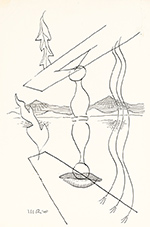
Man Ray (1890-1976), Symètrie
Philadelphia 1890-1976 Paris
signed MR and dated 40 (lower left)
pen and ink on paper, 45 by 30.5cm., 17 3/4 by 12in.
Executed in 1940; drawing to his female companion in Paris prior to Man Ray fleeing Paris for the United States